
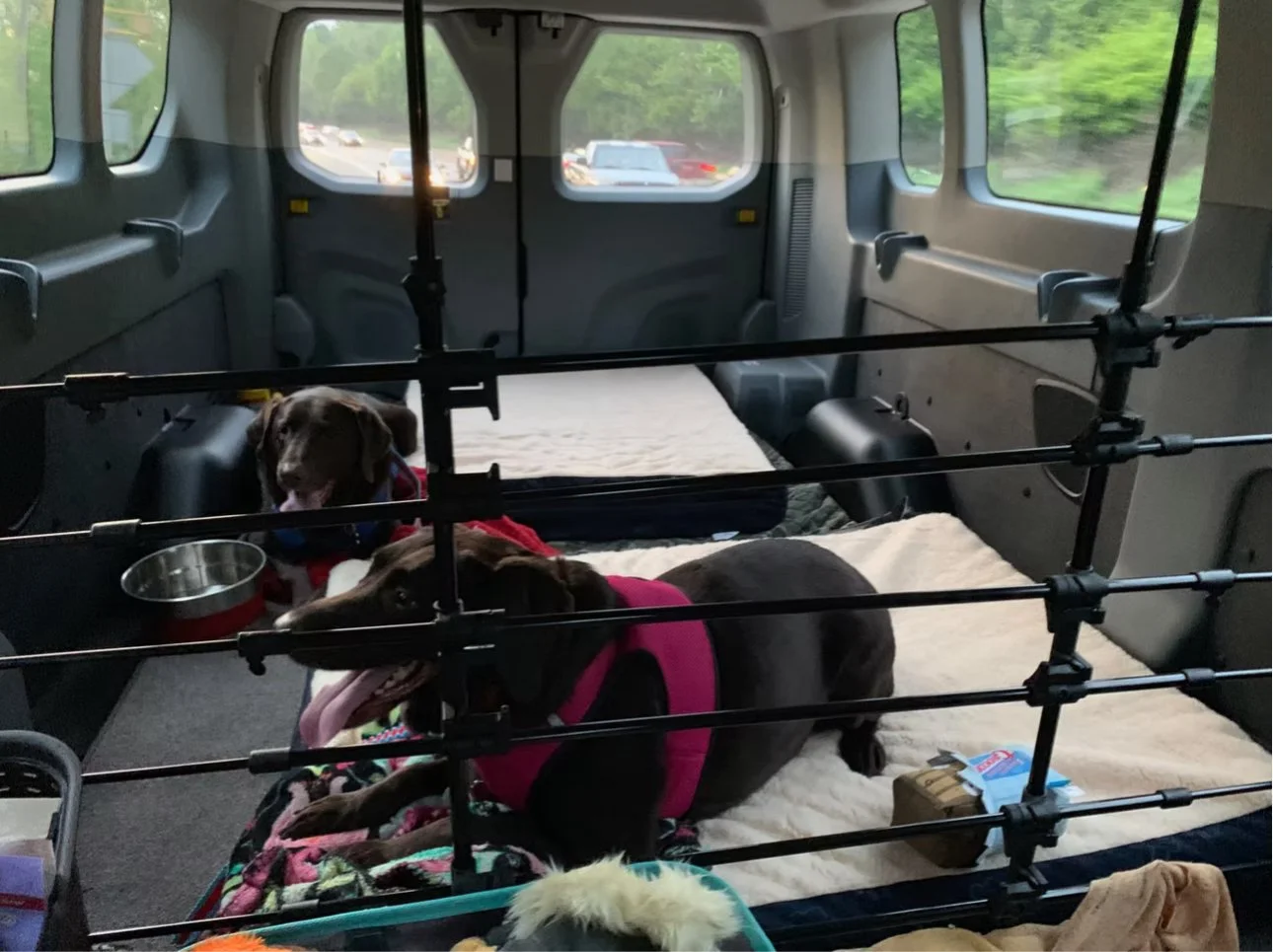
When you are planning a long-distance move with a pet, a map is often the first thing you open. It gives you a route, a mileage estimate, and a number of driving hours. Those are useful starting points—but they do not describe the whole journey your pet will take.
A thoughtful transport itinerary accounts for the living passenger, the people meeting the vehicle, and what can reasonably happen along the route. Understanding those pieces helps you ask better questions and prepare for arrival without treating a map estimate as a promise.
Separate driving time from the full journey
Time spent traveling between addresses is only one part of door-to-door transport. Pickup includes a handoff of your pet, supplies, and instructions. The trip also needs time for the care arrangements agreed for your pet, operational stops, and the delivery handoff.
Rather than dividing mileage by an assumed speed, ask your coordinator to explain the proposed travel days. Which day is pickup planned? Is an overnight stop anticipated? What arrival window is being discussed? That conversation is more useful than trying to fit every part of the journey into the shortest number shown on a screen.
Tell the team what your pet’s day actually looks like
A route plan needs current information about the pet traveling it. Share the usual routine, handling preferences, mobility limitations, and any care instructions that could affect how the trip is organized. For multiple pets, describe each one separately instead of assuming the same routine works for all of them.
Your coordinator can discuss how those needs fit the selected service. Medical questions and changes to a prescribed routine belong with your veterinarian. The planning goal is not to compress care to match a map; it is to understand the journey before departure.
Understand what your service changes—and what it does not
Pet Express private transport centers one family’s pets and offers itinerary flexibility. Shared Shuttle travel involves a different routing arrangement. Ask how the service you select affects the proposed pickup window, route, and delivery planning rather than assuming every quote describes the same schedule.
With Owner Ride-Along, the itinerary also needs to account for the person traveling with the pets. Discuss passenger needs and luggage early. On a trip involving an overnight stay, hotel arrangements depend on the pets’ needs and number, the travel plan, and hotel rules. Do not assume every property accepts every pet combination.
Private service is not a reason to rush care or ignore conditions. Safe weather decisions matter for every service, and flexibility does not turn a preferred arrival time into a guarantee.
Give fixed commitments a name before booking
Some timing details are preferences; others determine whether someone can receive your pet at all. Explain which is which. A family member’s work shift, a building’s access hours, or the time you receive keys to a new home can affect the handoff even if the driving route looks straightforward.
Tell your coordinator about those limits before arranging transport. If a real-estate closing or household delivery is involved, identify who can confirm access and who will be responsible for receiving the pet. Pet transport complements household movers and closing logistics; it does not replace those services or control their schedules.
Plan for an arrival window, not a stopwatch
Ask how the team will communicate updated arrival information and who should receive it. Keep a primary contact reachable and make sure a backup person understands the agreed handoff arrangements. If the receiving person changes, notify the coordinator rather than relying on a message passed through several relatives.
For a cross-country journey, write down the time zone alongside any pickup or delivery estimate. Avoid scheduling an unrelated, nonrefundable commitment immediately around an estimated arrival. Discuss a workable receiving plan instead of assuming the vehicle will arrive at one exact minute.
Use the estimate to prepare, then keep the plan current
A useful itinerary discussion ends with a few clear answers: the service selected, the proposed travel days, expected overnight needs, the receiving contact, the arrival window, and how updates will be shared. Put those details together so everyone is working from the same version.
Returning families should still review them for each journey. A familiar route may involve different care needs, addresses, or receiving arrangements this time. Starting early leaves more room for planning and date options—not a guarantee of a particular date. Your pet is family, and a good travel conversation should focus on the individual making the trip, not only the miles between two pins.
For help organizing the people on either end, read our guide to a clear family communication plan and discuss your proposed journey with your Pets Paws & Pals coordinator.